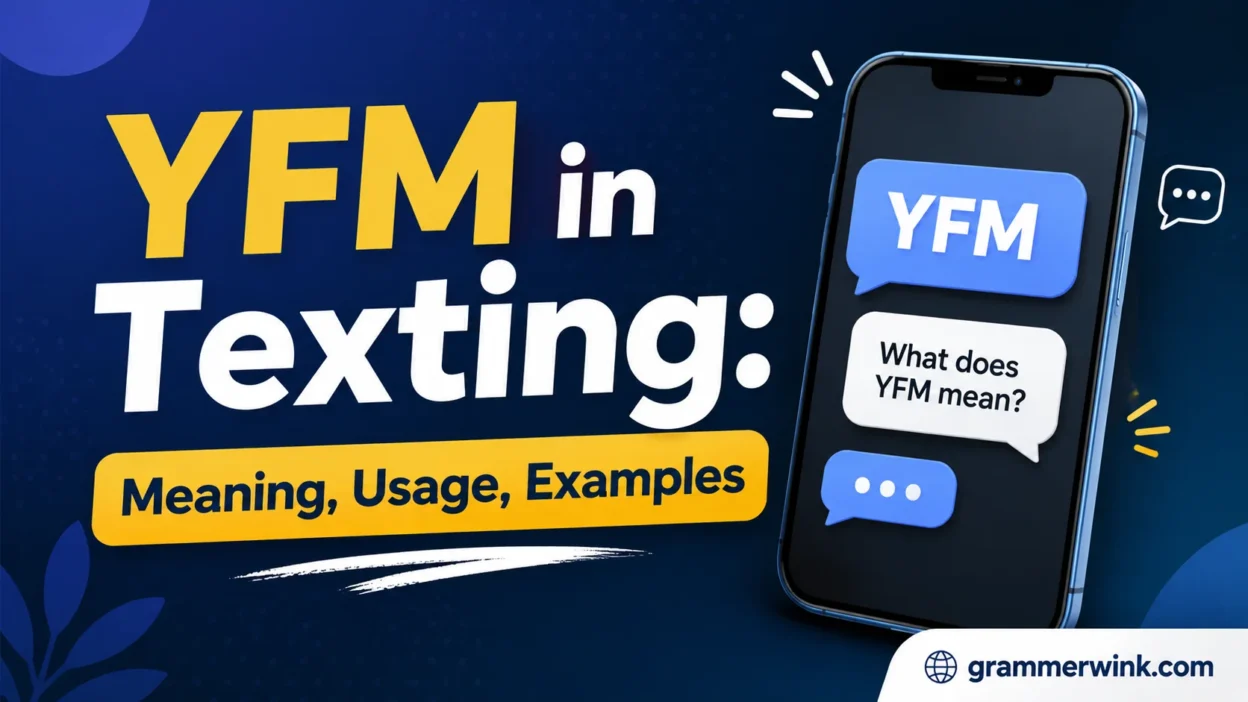
YFM in Texting is a popular abbreviation used in casual online conversations and text messages.It usually means “You Feel Me?”, asking whether someone understands your feelings or point.People often use YFM when they want to connect emotionally with another person.The expression can also mean “Do you understand?” depending on the conversation and context.You may see it in texts, social media, chats, and other informal digital spaces.Because it sounds friendly and conversational, YFM is mostly used with friends and peers.Understanding its meaning can help you read messages naturally and respond appropriately.
The meaning of YFM in texting can change slightly depending on how it is used.Sometimes, a person uses it to seek agreement after sharing an opinion or experience.For example, someone might say, “That exam was exhausting, YFM?” to ask for understanding.In this situation, YFM expresses shared feelings, agreement, or understanding between two people.It can also make a message feel more relaxed, personal, and relatable than formal language.However, the abbreviation is best suited for informal conversations, not professional communication.Knowing the right context makes YFM easier to understand and use correctly.
Learning YFM meaning, usage, and examples can make modern texting language much easier.Like many internet abbreviations, its meaning depends on the surrounding words and situation.A close friend may use YFM to share emotions, while another person may use it for agreement.It can communicate “Do you understand me?”, “Can you relate?”, or “You know what I mean?”.The abbreviation is especially common in casual chats and social media conversations.Still, readers should consider the sender’s tone before deciding what YFM means.By exploring practical examples, you can learn when to use YFM naturally in everyday texting.
What Does YFM Mean in Texting?
In texting, YFM stands for “You Feel Me?”
It is a conversational phrase used to:
- Ask if someone understands you
- Check if someone agrees with your point
- Build emotional connection in informal speech
In simpler terms, it works like:
- “Do you get what I mean?”
- “Are you with me on this?”
- “You understand, right?”
The phrase isn’t meant to sound formal or structured. It reflects natural speech patterns, especially in fast, expressive conversation styles.
Breaking it down clearly
AbbreviationMeaningIntentYFMYou Feel Me?Seeking understanding or agreement
Unlike rigid acronyms, YFM depends heavily on tone and context. The same phrase can feel like a question, a statement, or even emotional emphasis.
How People Actually Use YFM in Conversations
People don’t use YFM randomly. It usually appears at the end of a thought or emotional statement.
Let’s break down the real usage patterns you’ll see in everyday texting.
To check understanding
This is the most common use case.
Example:
“That meeting was confusing, yfm?”
Here, the speaker wants confirmation that the other person also understood the situation.
It works like a soft check-in. Instead of asking directly “Do you understand?”, YFM makes it sound more natural and conversational.
To build agreement
YFM often appears when someone wants validation.
Example:
“This weather is way too hot, yfm”
The speaker isn’t always asking a question. They are pushing for agreement.
In many cases, the other person just replies:
- “Facts”
- “Yeah fr”
- “I know right”
No explanation needed. The phrase already sets the tone.
To express emotion or shared experience
Sometimes YFM carries emotional weight.
Example:
“Life’s been exhausting lately, yfm”
This version doesn’t strictly ask for confirmation. It invites empathy.
It works like a bridge between people, especially when someone wants to feel understood without overexplaining.
To emphasize a point
In some conversations, YFM acts like punctuation.
Example:
“Timing is everything in life, yfm”
Here, the speaker uses it to strengthen their statement rather than expect a response.
It’s similar to saying:
- “You know what I mean”
- “Just saying”
- “Think about it”
Tone and Context: When YFM Works (and When It Doesn’t)
YFM is flexible, but it only works in the right environment. Using it in the wrong place can feel awkward or unprofessional.
Let’s break it down clearly.
Where YFM works best
YFM fits naturally in informal communication spaces.
Casual environments:
- Friend group chats
- Direct messages
- Social media replies
- Gaming chats
- Short-form video captions
Example:
“That game was crazy last night, yfm”
People expect relaxed language here. Slang feels normal.
Where YFM feels out of place
Some settings require clarity and professionalism.
Avoid YFM in:
- Business emails
- Academic writing
- Job applications
- Formal presentations
- Customer support communication
Example of what NOT to write:
“We need to revise the proposal, yfm”
This sounds unprofessional and confusing in formal contexts.
Instead, say:
“We need to revise the proposal. Do you agree?”
Read More: All-Time Favorite vs All Times Favorite: The Correct Usage
Variations and Similar Expressions
YFM isn’t the only phrase that serves this purpose. English and slang culture offer many variations that carry similar meaning.
Common alternatives
These phrases function almost identically:
- “You know what I mean?”
- “Right?”
- “You get me?”
- “Feel me?”
- “You see what I’m saying?”
Each one slightly changes tone but keeps the same goal: shared understanding.
Slang-heavy variations
In more expressive or regional speech, you might see:
- “You dig?”
- “Yk what I’m sayin’”
- “You catch my drift?”
- “Feel what I’m saying?”
These variations often appear in music, street conversation, and casual online messaging.
Subtle differences in meaning
PhraseToneEmotional WeightYFMCasual, expressiveMediumYou know what I meanNeutralLowYou feel meEmotionalHighRight?DirectLowYou get meFriendlyMedium
Real-Life Text Examples (With Breakdown)
Let’s look at how YFM appears in realistic conversations. This helps you understand not just meaning but intention.
Example 1: Shared confusion
Text:
“That lecture made no sense, yfm”
Breakdown:
- Speaker feels confused
- They expect agreement
- They want confirmation of shared experience
Likely reply:
“Yeah it was all over the place”
Example 2: Decision making
Text:
“We should leave early, yfm”
Breakdown:
- Speaker suggests an action
- YFM softens the suggestion
- It invites agreement before commitment
Likely reply:
“Yeah let’s go”
Example 3: Emotional expression
Text:
“Sometimes you just need distance from everything, yfm”
Breakdown:
- No direct question asked
- Used for emotional resonance
- Invites understanding rather than response
Likely reply:
“I get that”
Example 4: Strong opinion
Text:
“Consistency beats talent every time, yfm”
Breakdown:
- Statement feels philosophical
- YFM adds emphasis
- Encourages reflection rather than reply
Misinterpretations of YFM
Even though YFM is common in casual texting, people often misunderstand it.
Mistake: thinking it’s a formal acronym
Some people assume YFM belongs to corporate or technical language. It doesn’t.
It comes from spoken conversational slang, not structured abbreviation systems.
Mistake: interpreting it literally
YFM is not always a real question.
Sometimes it doesn’t expect a response. Instead, it reinforces emotion or opinion.
Mistake: confusing it with similar abbreviations
People often mix it up with:
- YW (You’re Welcome)
- YN (You’re Not / You Never depending on context)
- YK (You Know)
These are completely different in meaning and usage.
Where YFM Comes From (Language Evolution)
YFM didn’t appear overnight. It evolved through spoken language first.
Cultural and linguistic roots
Linguists often associate phrases like “you feel me?” with African American Vernacular English (AAVE). This form of speech has deeply influenced modern slang and internet language.
Over time, phrases like YFM moved through:
- Music lyrics
- Urban conversation styles
- Social media platforms
- Messaging culture
Spread through digital communication
Once texting and social platforms grew, shorter forms like YFM became popular because:
- They save time
- They feel expressive
- They match spoken rhythm in text form
Why it stuck
YFM survives because it fills a gap:
- It’s not just a question
- It’s not just a statement
- It’s both emotional and functional
That flexibility keeps it relevant.
Is YFM Still Relevant in 2026?
Yes, but its usage depends on context and audience.
Where it remains strong
- Casual texting among friends
- TikTok-style captions
- Meme culture
- Gaming chats
Where usage is declining
- Corporate social media
- Formal writing spaces
- Older demographic communication
Generational usage snapshot
GroupUsage levelNotesTeensVery highNatural part of speechYoung adultsHighCommon in textingOlder adultsLowOften unfamiliarProfessionalsRareAvoided in formal tone
How to Respond When Someone Says YFM
You don’t need a complicated reply. YFM usually invites simple acknowledgment.
Natural responses
- “Yeah, I get you”
- “Facts”
- “I feel that”
- “True”
- “You’re right”
When it’s rhetorical
Sometimes you don’t need to respond at all. If someone says:
“Life hits different when you’re tired, yfm”
They may not expect an answer. They’re expressing emotion.
When it asks for agreement
If it clearly functions as a question:
“That plan makes sense, yfm?”
Then respond directly:
“Yeah, it does”
Key Takeaways About YFM in Texting
Let’s simplify everything:
- YFM means “You Feel Me?”
- It checks understanding or agreement
- It often adds emotional depth to statements
- It belongs to casual, informal communication
- Context decides whether it’s a question or emphasis
Final Thoughts
YFM shows how language evolves in real time. People don’t just text words. They text emotion, rhythm, and shared understanding.
Once you recognize YFM in conversation, you stop decoding it and start feeling it. That’s the whole point.
FAQs
What does YFM mean in texting?
YFM means “You feel me?” People use it to ask if someone understands, agrees, or relates to what they just said. It works best in casual conversations.
Is YFM a question or a statement?
It can be both. Sometimes it acts like a real question, especially when someone wants confirmation. Other times, it simply adds emphasis without expecting a reply.
Example:
- Question: “We should leave now, yfm?”
- Statement: “Life gets complicated sometimes, yfm”
Where do people usually use YFM?
You’ll mostly see YFM in:
- Text messages between friends
- Social media captions
- Gaming chats
- Casual online conversations
It rarely appears in professional or formal settings.
Is YFM considered slang?
Yes. YFM is informal slang rooted in conversational speech. It comes from the phrase “you feel me?” which is commonly used in everyday spoken English.
How should I respond when someone says YFM?
Keep it simple. You don’t need a long reply.
Good responses include:
- “Yeah, I get you”
- “Facts”
- “I feel that”
- “True”
Sometimes, no response is needed if it’s used for emphasis rather than a question.
Conclusion
YFM in texting is simple on the surface but surprisingly expressive in real use. It stands for “You feel me?” and it helps people check understanding, build agreement, or add emotional weight to what they’re saying.What makes YFM interesting is how flexible it is. One person might use it to ask a direct question, while another uses it to underline a feeling or opinion. That flexibility is why it fits so naturally into casual digital conversations.
You’ll mostly see YFM in relaxed spaces like friend chats, social media, or gaming messages. It doesn’t belong in formal writing, but it thrives where conversation feels fast, personal, and emotional.Once you recognize how it works, you won’t need to stop and decode it anymore. You’ll just read it the way it’s meant to be read: as a quick, human way of saying, “Do you get me?”