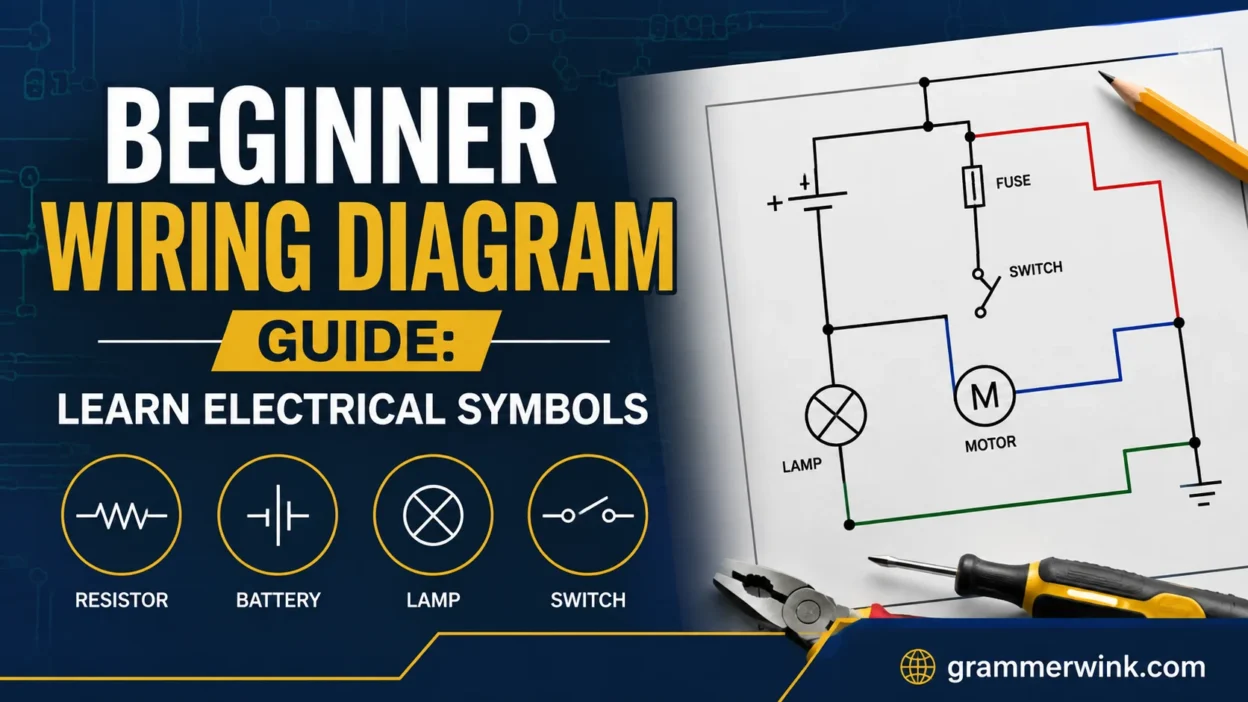
Learning a wiring diagram is easier when you first understand the basic electrical symbols used in circuits. These symbols provide a simple visual language that shows how different electrical components connect. By recognizing wires, switches, lights, batteries, and outlets, beginners can understand a diagram more confidently. A clear understanding of electrical symbols also helps explain how current moves through different parts of a circuit. This guide makes wiring diagrams easier to read by explaining common symbols in simple language. With regular practice, you can develop strong diagram-reading skills without feeling overwhelmed by technical drawings.
A wiring diagram works like a visual roadmap that explains how electrical components are connected. Each symbol represents a specific component or function, while lines show the connections between those parts. For example, a switch can control the flow of electricity, while a lamp symbol identifies a lighting component. Learning these common wiring symbols allows you to follow circuits and understand their basic operation. It also helps you identify power sources, connections, switches, and loads within a diagram. Once you understand these symbols, even detailed electrical diagrams can become much easier to interpret and follow.
This Beginner Wiring Diagram Guide will introduce the most important electrical symbols you should know. You’ll learn how to identify wires, switches, resistors, batteries, lamps, and outlets in simple wiring drawings. Understanding these symbols can help you recognize connections and circuit paths more quickly. The guide also explains how different electrical components work together to form a complete circuit. Whether you’re learning for study, DIY projects, or general knowledge, these basics can be useful. By practicing with simple examples, you can build confidence in reading diagrams and understand electrical layouts more clearly.
Beginner Wiring Diagram Basics: What a Wiring Diagram Actually Shows
A beginner wiring diagram is a simplified visual map of electrical connections. It shows how electricity flows from a power source to devices like lights, fans, or outlets.
However, it does not show the physical placement of wires in your walls. Instead, it focuses on relationships between components.
Think of it like a subway map. The stations matter more than the street layout.
Key idea you should remember
A wiring diagram answers one question:
“What connects to what, and how does electricity move through the circuit?”
Wiring Diagram vs Other Electrical Diagrams
Understanding differences early prevents confusion later.
| Type of Diagram | Purpose | Example Use |
| Wiring Diagram | Shows real connections between components | Home electrical wiring |
| Schematic Diagram | Shows logical flow of electricity | Electronics design |
| Pictorial Diagram | Shows realistic images of parts | DIY appliance repair guides |
A beginner wiring diagram is the most practical type for real-world electrical work.
Beginner Wiring Diagram Fundamentals: Core Electrical Concepts You Must Know
Before you interpret diagrams, you need to understand how electricity behaves in a circuit.
Voltage, Current, and Resistance (Simple Breakdown)
Electricity works like water in pipes:
- Voltage (V) = pressure pushing electricity forward
- Current (A) = amount of electricity flowing
- Resistance (Ω) = restriction that slows flow
A simple analogy:
Voltage is the water pump. Current is the water. Resistance is a narrow pipe.
Most homes globally use:
- 120V systems (North America, parts of Asia)
- 230–240V systems (Pakistan, UK, most of Europe)
In Pakistan, standard household voltage is typically 230V AC at 50Hz.
AC vs DC in Beginner Wiring Diagram Context
- AC (Alternating Current): Used in homes and buildings
- DC (Direct Current): Used in batteries, phones, electronics
Why AC matters in wiring diagrams:
- It allows long-distance power transmission
- It is what your wall sockets deliver
Read More: ALR Meaning in Text: What It Means
Grounding: The Safety Backbone
Grounding provides a safe path for electricity to flow if something goes wrong.
Without grounding:
- Metal appliances can become dangerous
- Electrical shocks become more likely
With grounding:
- Fault current flows safely into the earth
A licensed electrician once summarized it simply:
“Grounding doesn’t stop faults. It gives them a safe place to go.”
Beginner Wiring Diagram Symbols: The Language of Electricity
Wiring diagrams use symbols instead of pictures. Learning them is like learning an alphabet.
Common Electrical Symbols
| Symbol | Meaning | Real-Life Example |
| ⏻ Switch | Opens/closes circuit | Light switch on wall |
| 💡 Load | Uses electricity | Bulb, fan, heater |
| ⏚ Ground | Safety connection | Earth wire in outlets |
| ——— | Wire | Copper conductor |
| ● | Connection point | Junction box join |
Why symbols matter in beginner wiring diagrams
Symbols:
- Simplify complex systems
- Prevent language barriers
- Make large systems readable
A wiring diagram for a house may contain hundreds of wires. Symbols keep it readable instead of overwhelming.
How to Read a Beginner Wiring Diagram Step by Step
Reading a beginner wiring diagram becomes easy when you follow a structured approach.
Start with the Power Source
Locate:
- Live wire (hot)
- Neutral wire
- Ground wire
Electricity always flows from:
Power source → device → return path
Trace the Current Flow
Follow the path visually:
- Electricity leaves the source
- Passes through a switch
- Powers a device (light, fan, etc.)
- Returns through neutral
This loop must always be complete for anything to work.
Identify Control Points
Control points include:
- Switches
- Circuit breakers
- Dimmers
These act like “decision points” in the circuit.
Confirm Grounding Connections
Always check:
- Ground wires are connected properly
- Metal parts are safely grounded
This step prevents electric shock risks.
Beginner Wiring Diagram Examples: Common Circuits Explained
Let’s break down real-world circuits you will actually see.
Simple Light Switch Circuit
This is the most basic wiring system.
Flow:
- Power enters switch
- Switch controls flow
- Electricity reaches bulb
- Circuit completes via neutral
Real-life example:
Your bedroom light switch works exactly like this.
Two-Way Switch Circuit
Used in:
- Staircases
- Long hallways
- Large rooms
It allows one light to be controlled from two locations.
How it works:
- Two switches share control of one circuit
- Either switch can complete or break the circuit
Outlet Wiring Circuit
Standard wall outlet wiring includes:
- Live wire (brown or red)
- Neutral wire (blue or black)
- Ground wire (green/yellow)
Modern homes often wire outlets in parallel, so each device receives full voltage.
Series vs Parallel Circuits
| Type | Behavior | Example | Problem |
| Series | One path | Old Christmas lights | One failure breaks all |
| Parallel | Multiple paths | Home wiring | Independent operation |
Homes use parallel wiring for reliability and safety.
Tools You Need for Beginner Wiring Diagram Practice
Even if you’re only learning diagrams, tools help you understand real connections.
Essential tools
- Wire stripper
- Multimeter
- Voltage tester
- Insulated screwdriver set
- Electrical tape
Why a multimeter matters
A multimeter measures:
- Voltage
- Continuity
- Resistance
It helps you confirm whether a diagram actually matches reality.
Beginner Wiring Diagram Safety Rules You Must Never Ignore
Electricity is predictable—but unforgiving.
Follow these rules strictly:
- Always turn off power before touching wires
- Never assume a wire is dead
- Use insulated tools only
- Test before touching
- Keep hands dry
A common electrician warning says:
“Electricity doesn’t warn you twice.”
Common Beginner Mistakes in Wiring Diagrams
Understanding mistakes helps you avoid costly errors.
Mistake: Confusing live and neutral wires
- Result: circuits may still work but become dangerous
Mistake: Ignoring grounding
- Result: shock risk increases significantly
Mistake: Overloading circuits
- Result: breaker trips or wiring overheats
Mistake: Misreading symbols
- Result: incorrect connections
Real-World Case Study: Simple Home Lighting Circuit
Let’s walk through a real scenario.
Situation
A homeowner installs a single switch controlling a ceiling light.
What happens in the diagram
- Live wire enters switch box
- Switch connects/disconnects flow
- Wire runs to ceiling light
- Neutral returns to panel
Result
- Flip switch ON → light turns ON
- Flip switch OFF → circuit breaks
Common issue in real installations
Loose neutral connections often cause flickering lights.
Beginner Wiring Diagram Troubleshooting Guide
When circuits fail, diagrams help locate the issue.
Light not turning on
Check:
- Bulb condition
- Switch connection
- Power supply
Breaker keeps tripping
Likely causes:
- Short circuit
- Overloaded circuit
- Faulty appliance
Flickering lights
Possible causes:
- Loose wiring
- Voltage fluctuation
- Aging fixture
When You Should Stop DIY and Call an Electrician
Not every problem is DIY-friendly.
Call a professional when:
- Main panel needs repair
- You smell burning wires
- Breakers trip repeatedly
- You deal with high-voltage systems
- You plan full home rewiring
Conclusion
Understanding a beginner wiring diagram is one of the first steps toward learning electrical systems safely and effectively. By recognizing common electrical symbols, following wire paths, and understanding how components connect, you can read diagrams with greater confidence. Whether you’re repairing household wiring, working on automotive circuits, or starting an electronics project, learning to interpret wiring diagrams will save time, reduce mistakes, and improve safety. Keep practicing with simple diagrams before moving on to more complex circuits, and always follow proper electrical safety guidelines when working with live systems.
FAQs
1. What is a wiring diagram?
A wiring diagram is a visual representation of an electrical circuit. It shows how wires, switches, outlets, lights, and other components are connected using standardized electrical symbols.
2. Why are electrical symbols important in wiring diagrams?
Electrical symbols provide a universal language that makes wiring diagrams easy to understand regardless of the manufacturer or country. They help identify components quickly and reduce confusion.
3. Can beginners learn to read wiring diagrams?
Yes. Beginners can learn by first understanding basic electrical symbols, tracing wire connections, and practicing with simple circuits before progressing to more advanced diagrams.
4. What is the difference between a wiring diagram and a schematic diagram?
A wiring diagram shows the physical layout and wire connections between components, while a schematic diagram focuses on how the circuit functions using symbolic representations rather than physical locations.
5. What safety precautions should I take when using a wiring diagram?
Always turn off the power before working on any electrical system, use insulated tools, verify circuits with a voltage tester, and follow local electrical codes and safety standards to prevent injury or equipment damage.