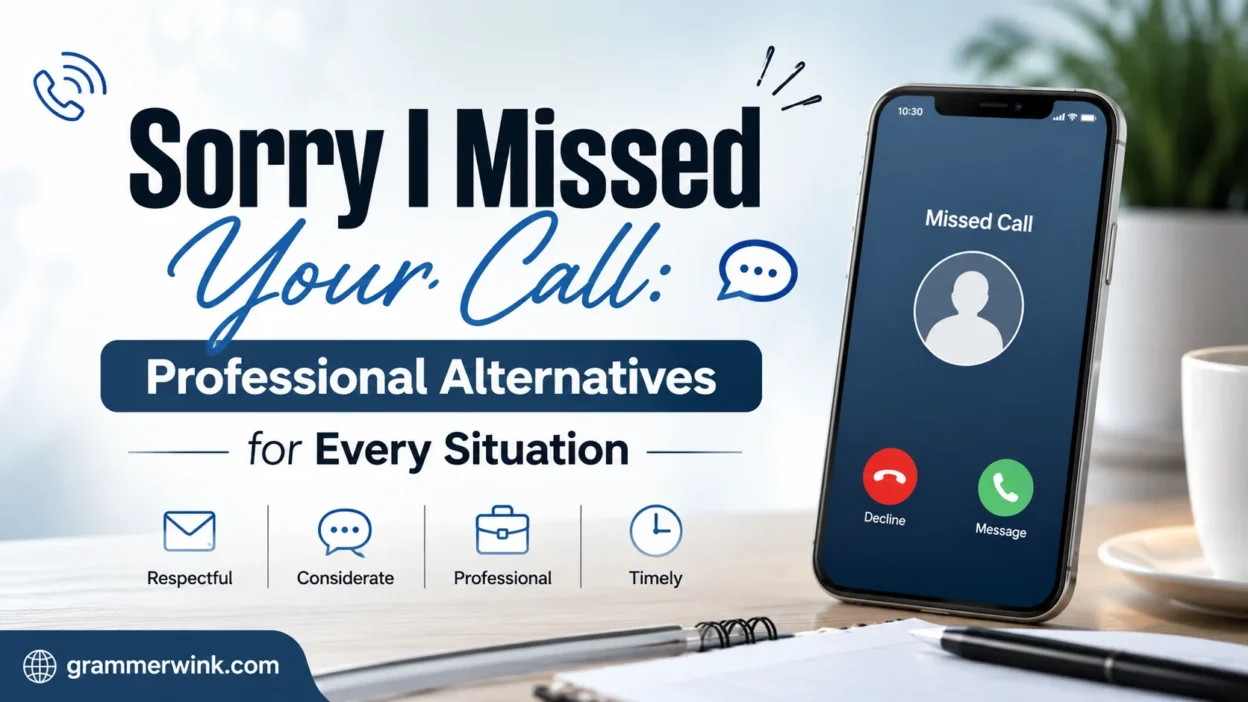
In professional communication, the right wording can make a strong impression even after you’ve missed a call. Instead of sending a simple “Sorry I missed your call,” choosing a more thoughtful response helps demonstrate respect, courtesy, and professionalism. Whether you’re replying to a client, manager, coworker, or business partner, the way you acknowledge the missed call can influence the tone of the conversation and encourage a positive response. Learning a variety of professional alternatives ensures you’re prepared for every situation with confidence.
A well-crafted message does more than simply apologize—it also shows your availability, responsiveness, reliability, and willingness to help. In today’s fast-paced workplace, missed calls happen for many reasons, including meetings, travel, personal commitments, or network issues. What truly matters is how quickly and professionally you follow up. Using polite expressions, clear language, and a friendly tone reassures the other person that you value their time, communication, and business relationship.
This guide explores the best professional alternatives to saying “Sorry I Missed Your Call” for a wide range of workplace, business, and everyday situations. You’ll discover polite phrases, email-friendly responses, text message examples, and formal expressions that help you communicate with confidence. Each alternative includes its meaning, appropriate context, and real-life examples, making it easy to choose the most suitable response whenever you need to reconnect after a missed call. By the end, you’ll have a collection of professional phrases ready for every communication scenario.
What Does “Sorry I Missed Your Call” Mean?
The phrase “Sorry I missed your call” acknowledges that someone attempted to contact you and you were unavailable to answer.
In professional settings, the statement serves several purposes:
- It recognizes the caller’s effort.
- It demonstrates awareness of the missed communication.
- It opens the door for further discussion.
- It shows courtesy and professionalism.
However, not every missed call requires an apology.
For example, if you were in a meeting, attending a conference, or outside business hours, saying “sorry” may not be necessary. In those cases, focusing on responsiveness often creates a stronger impression.
Consider these two responses:
Response A:
Sorry I missed your call.
Response B:
I noticed your call and wanted to follow up.
The second response sounds proactive and confident. It shifts the focus from the missed call to the next step.
When Should You Use an Alternative to “Sorry I Missed Your Call”?
Different situations call for different communication styles.
A recruiter, for example, expects professionalism. A long-term client may appreciate warmth and friendliness. A coworker often prefers concise communication.
Using alternatives helps you:
- Sound more polished.
- Avoid repetitive language.
- Adapt to different audiences.
- Create stronger professional relationships.
- Focus on solutions rather than apologies.
Situations Where Alternatives Work Best
Client Communication
Clients appreciate prompt responses and clear next steps.
Job Interviews
Recruiters often value professionalism and confidence over excessive apologies.
Workplace Communication
Managers and coworkers generally prefer concise updates.
Customer Service
Customer-focused language creates a positive experience.
Networking Conversations
Professional networking requires responsiveness and initiative.
Read More: 10 Better Ways To Say “Glad To Hear That”
I Just Saw Your Call and Wanted to Get Back to You
This phrase sounds natural, professional, and responsive.
It communicates that you’re taking action without dwelling on the missed call itself.
Why It Works
- Professional but friendly
- Shows responsiveness
- Avoids unnecessary apologies
Example
Hi Sarah, I just saw your call and wanted to get back to you. Please let me know a convenient time to connect.
Thank You for Calling — How Can I Help?
Instead of apologizing, this response focuses on assisting the caller.
Why It Works
- Customer-focused
- Positive tone
- Encourages conversation
Example
Thank you for calling. How can I help with your request today?
Best For
- Customer support
- Sales representatives
- Client services
I Was Unavailable When You Called
Sometimes simple and direct works best.
This phrase communicates availability without providing unnecessary personal details.
Why It Works
- Clear and concise
- Professional tone
- Suitable for formal communication
Example
I was unavailable when you called. I’m available now if you’d like to discuss the matter.
I Noticed Your Missed Call and Wanted to Follow Up
This alternative sounds proactive and professional.
Why It Works
- Demonstrates initiative
- Encourages continued communication
- Suitable for business relationships
Example
I noticed your missed call and wanted to follow up regarding your inquiry.
I’m Returning Your Call
A classic business communication phrase.
Why It Works
- Direct
- Professional
- Widely understood
Example
Hello David, I’m returning your call regarding yesterday’s meeting.
Ideal For
- Voicemails
- Formal callbacks
- Executive communication
Thanks for Reaching Out
This alternative shifts the focus toward appreciation.
Why It Works
- Positive wording
- Friendly and professional
- Strengthens rapport
Example
Thanks for reaching out. I wanted to connect regarding your message.
I Was Away From My Phone Earlier
A casual yet professional explanation.
Why It Works
- Provides context
- Maintains professionalism
- Suitable for workplace communication
Example
I was away from my phone earlier and just saw your call.
I Appreciate Your Patience
When responding after a delay, this phrase works exceptionally well.
Why It Works
- Focuses on the caller
- Creates goodwill
- Sounds professional
Example
I appreciate your patience while I was unavailable. How can I assist you today?
I’m Following Up Regarding Your Call
An excellent choice for business conversations.
Why It Works
- Action-oriented
- Professional
- Effective for sales and client interactions
Example
I’m following up regarding your call earlier today. Please let me know how I can help.
I Was Tied Up When You Called
This phrase sounds conversational while remaining professional.
Why It Works
- Natural language
- Friendly tone
- Suitable for familiar contacts
Example
I was tied up when you called but I’m available now if you’d like to chat.
I’m Available Now if You’d Like to Talk
Sometimes the best response is simply offering a solution.
Why It Works
- Direct
- Helpful
- Moves the conversation forward
Example
I noticed your call earlier. I’m available now if you’d like to talk.
Quick Comparison Table of Alternatives
| Alternative | Formality | Best For | Apology Included |
| I Just Saw Your Call and Wanted to Get Back to You | Medium | Clients | No |
| Thank You for Calling — How Can I Help? | Medium | Customer Service | No |
| I Was Unavailable When You Called | High | Corporate Settings | No |
| I Noticed Your Missed Call and Wanted to Follow Up | High | Business Contacts | No |
| I’m Returning Your Call | High | Voicemail | No |
| Thanks for Reaching Out | Medium | General Business | No |
| I Was Away From My Phone Earlier | Medium | Coworkers | No |
| I Appreciate Your Patience | High | Delayed Responses | No |
| I’m Following Up Regarding Your Call | High | Sales Professionals | No |
| I Was Tied Up When You Called | Medium | Familiar Contacts | No |
| I’m Available Now if You’d Like to Talk | Medium | Urgent Matters | No |
Common Mistakes to Avoid When Responding to a Missed Call
Even experienced professionals occasionally make communication mistakes.
Avoid these common pitfalls.
Over-Apologizing
Repeated apologies can weaken your message.
Less Effective
I’m so sorry. I feel terrible that I missed your call.
Better
I noticed your call and wanted to follow up.
The second option sounds more confident and productive.
Giving Too Much Information
You don’t need to explain your entire day.
Avoid
Sorry I missed your call. I was at lunch, then stuck in traffic, then helping a colleague, then attending a meeting.
Better
I was unavailable when you called.
Professional communication values clarity.
Waiting Too Long to Respond
Speed matters.
According to customer service research, prompt responses increase trust and satisfaction.
Even if you don’t have an immediate answer, acknowledge the call.
Example
Thank you for reaching out. I’ve received your message and will follow up shortly.
Using Generic Responses
Personalized responses create stronger relationships.
Generic
Sorry I missed your call.
Personalized
Thanks for reaching out regarding the project update. I’d be happy to discuss it.
How to Choose the Right Alternative Based on the Situation
Choosing the right phrase depends on your audience.
For Clients and Customers
Focus on service and responsiveness.
Recommended phrases:
- Thank you for calling — how can I help?
- Thanks for reaching out.
- I appreciate your patience.
For Managers and Executives
Keep communication concise and professional.
Recommended phrases:
- I was unavailable when you called.
- I’m returning your call.
- I’m following up regarding your call.
For Recruiters and Hiring Managers
Demonstrate professionalism and enthusiasm.
Recommended phrases:
- I just saw your call and wanted to get back to you.
- I’m returning your call regarding the position.
- I’m available now if you’d like to connect.
For Coworkers and Team Members
A conversational tone works well.
Recommended phrases:
- I was away from my phone earlier.
- I was tied up when you called.
- Thanks for reaching out.
For Networking Contacts
Show initiative and professionalism.
Recommended phrases:
- I noticed your missed call and wanted to follow up.
- Thanks for reaching out.
- I’m available now if you’d like to talk.
Professional Callback Message Templates
These ready-to-use templates can save time and help maintain a professional image.
Formal Callback Template
Hello [Name], I noticed your call earlier and wanted to follow up. Please let me know a convenient time to connect. I look forward to speaking with you.
Client Follow-Up Template
Thank you for reaching out. I saw your call and wanted to get back to you. Please let me know how I can assist.
Recruiter Callback Template
Hello [Recruiter Name], I just saw your call regarding the position and wanted to return it. I’m available at your convenience and look forward to speaking with you.
Customer Service Callback Template
Thank you for contacting us. I noticed your call and would be happy to assist with your request.
Internal Team Communication Template
Hi [Name], I was unavailable when you called. Please let me know what you need and I’ll be happy to help.
Email vs. Text: Should Your Response Change?
Absolutely.
Different communication channels require different approaches.
Professional Email Responses
Email allows for more context and formality.
Example
Thank you for reaching out. I noticed your call earlier and wanted to follow up. Please let me know a convenient time to discuss this further.
Business Text Messages
Keep messages short and direct.
Example
Hi John, I just saw your call. Let me know a good time to connect.
Voicemail Responses
Speak clearly and provide next steps.
Example
Hello Lisa, this is Mark returning your call. Please call me back at your convenience.
Messaging Platforms
Tools like Slack, Teams, and workplace messaging apps benefit from concise communication.
Example
Hi Sarah, I saw your call earlier. Let me know when you’re free to chat.
Communication Etiquette for Returning Missed Calls
Professional etiquette can dramatically improve your interactions.
Respond Promptly
Fast responses demonstrate reliability and professionalism.
Be Clear About Availability
Let people know when you’re available.
Example
I’m available between 2:00 PM and 5:00 PM today.
Offer a Next Step
Always move the conversation forward.
Example
Feel free to call me back or send an email if that’s easier.
Keep Messages Brief
Respect the recipient’s time.
Short messages often receive faster responses.
Match the Other Person’s Tone
Formal communication deserves a formal response.
Casual workplace communication can be more conversational.
Real-World Example: Why Wording Matters
Imagine two consultants responding to the same client.
Consultant A
Sorry I missed your call.
Consultant B
Thank you for reaching out. I noticed your call and wanted to follow up regarding your project. I’m available this afternoon if you’d like to connect.
Which response builds more confidence?
Most clients would choose Consultant B because the message feels proactive, attentive, and solution-focused.
Small wording changes can have a significant impact on professional relationships.
Faqs:
Is It Professional to Say “Sorry I Missed Your Call”?
Yes. The phrase is professional and widely accepted. However, alternatives often sound more confident and proactive.
What Is the Most Formal Alternative to “Sorry I Missed Your Call”?
“I was unavailable when you called” and “I’m returning your call” are among the most formal options.
Should You Always Apologize for Missing a Call?
No. If you were unavailable for legitimate reasons, focusing on responsiveness is often more effective than apologizing.
How Do You Respond to a Recruiter’s Missed Call?
A prompt callback or message works best.
Example:
I just saw your call regarding the position and wanted to return it. I’m available at your convenience.
What Should You Say in a Professional Voicemail Callback?
State your name, mention you’re returning the call, and provide clear contact information.
Conclusion
While “Sorry I missed your call” remains a perfectly acceptable phrase, it isn’t always the strongest option. In many professional situations, a response that emphasizes action, availability, and helpfulness creates a better impression.Phrases such as “I noticed your call and wanted to follow up,” “Thank you for reaching out,” and “I’m available now if you’d like to talk” shift attention toward solutions rather than apologies.
The most effective communication doesn’t dwell on the missed call. Instead, it focuses on what happens next. When you respond promptly, communicate clearly, and offer a path forward, you strengthen professional relationships and demonstrate reliability.