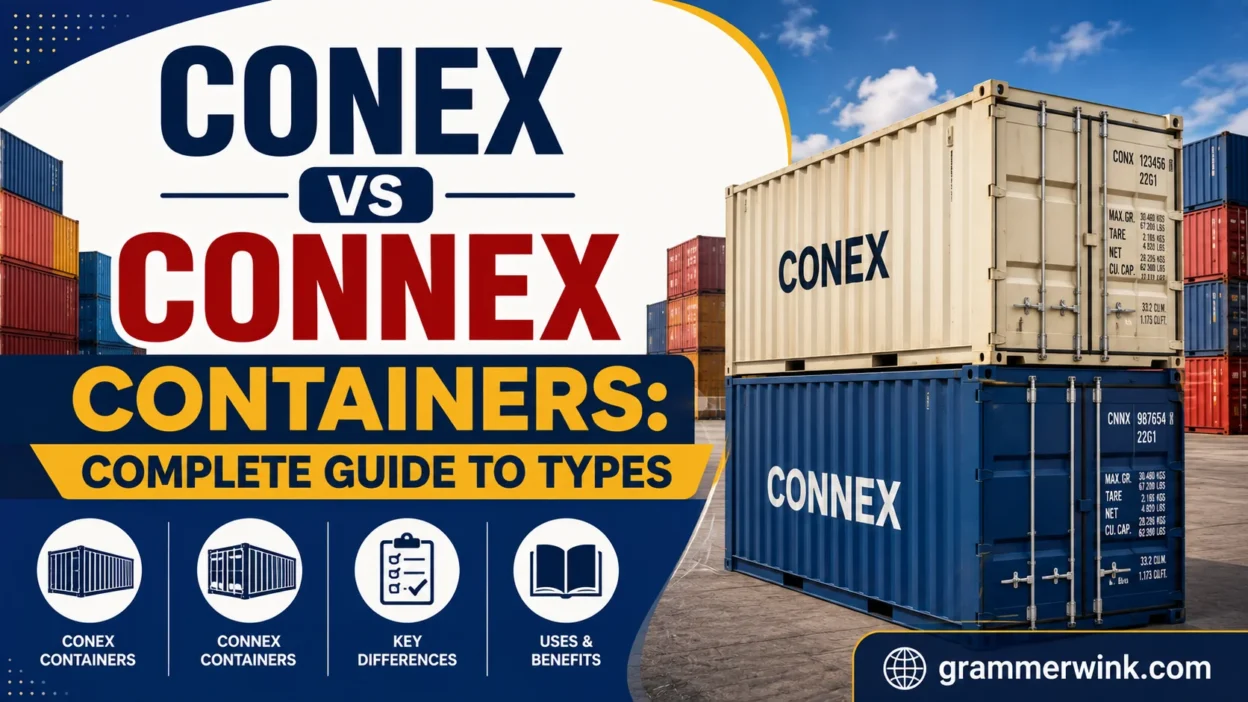
When people search for CONEX, CONNEX Containers, shipping containers, storage solutions, or cargo containers, they often wonder whether these terms describe different products or simply different names for the same steel container. In reality, CONEX originated as a military container developed for transporting supplies, while CONNEX has become a widely used variation of the same name. Today, these steel containers are commonly used for shipping, secure storage, construction sites, and even container homes. Understanding the distinction helps buyers choose the right container for their specific needs.
Whether you need a 20-foot container, 40-foot container, high cube container, or a specialized storage container, learning the basics is essential before making a purchase. Modern CONEX containers are built from corrugated steel, making them highly durable, weather-resistant, and capable of protecting valuable goods during long-distance transport. Businesses, homeowners, and contractors rely on these cargo containers because they provide excellent security, mobility, and long-term value. Knowing the available types and their uses ensures you invest in the most suitable option.
This complete guide explores the difference between CONEX and CONNEX, explains the various container types, highlights their common applications, and discusses important buying considerations. You’ll also discover how these shipping containers are used in commercial projects, industrial operations, residential storage, and creative conversions such as offices and homes. By the end of this guide, you’ll have a clear understanding of container sizes, features, advantages, and the factors that matter most when selecting the perfect CONEX container for your needs.
What Is a CONEX Container (and Why It Still Matters Today)
A CONEX container originally comes from “CONtainer EXpress,” a standardized military shipping system developed by the U.S. Army in the 1950s.
The idea was simple: Move supplies faster. Store them safely. Deploy them anywhere.
Over time, CONEX evolved into what we now recognize as standard shipping containers, governed globally by ISO standards.
Key idea you should remember:
A CONEX container is the ancestor of modern steel shipping containers.
Why it became important
Before CONEX containers, military and commercial logistics looked like this:
- Loose crates
- Wooden boxes
- Time-consuming unloading processes
That caused:
- Delays in supply chains
- Damage to goods
- High labor costs
CONEX changed that by introducing:
- Standardized sizing
- Stackable steel design
- Forklift and crane compatibility
CONEX vs CONNEX: Is There a Real Difference?
This is where most confusion starts.
The truth:
There is no official industry standard called “CONNEX container.”
Most of the time, “CONNEX” is:
- A spelling variation of CONEX
- A branding variation used by companies
- Or a misunderstanding of the original term
Read More: What Do You Call Someone Who Loves Nature
Simple breakdown
TermMeaningAccuracyCONEXOriginal military container systemCorrectCONNEXCommon misspelling or branding variationInformal / incorrectISO ContainerModern global shipping container standardCorrect successor
Bottom line:
If you’re talking logistics, shipping, or storage, CONEX is the correct historical term, while ISO containers are what you use today.
Evolution From CONEX to Modern Shipping Containers
The transition didn’t happen overnight. It evolved in stages.
Stage 1: Military CONEX Boxes (1950s–1960s)
- Small steel containers
- Used for battlefield logistics
- Hand-loaded and crane-lifted
Stage 2: Container Standardization (1960s–1970s)
- Introduction of ISO standards
- Containers became globally uniform
- Ports adapted crane systems
Stage 3: Modern ISO Shipping Containers (Today)
- 20-foot and 40-foot standard sizes
- Intermodal transport (ship, truck, rail)
- Massive global trade efficiency boost
Interesting fact:
Modern containerization is often credited with reducing global shipping costs by over 90% compared to pre-container systems.
Standard CONEX Container Sizes and Dimensions
Even though CONEX is an older term, it’s still used loosely when referring to standard containers.
Common container sizes
Container TypeLengthWidthHeightTypical Use10 ft CONEX (rare)10 ft8 ft8.5 ftMilitary / small storage20 ft container20 ft8 ft8.5 ftStandard shipping40 ft container40 ft8 ft8.5 ftBulk cargoHigh cube container40 ft8 ft9.5 ftTall cargo
Internal capacity example:
A 20 ft container can typically hold:
- ~33 cubic meters of goods
- Around 10 standard pallets (depending on stacking method)
What CONEX Containers Are Used For Today
Even though the term is historical, the concept is everywhere.
Logistics and Shipping
This is the biggest use case:
- Global cargo transport
- Port-to-port shipping
- Intermodal freight systems
Military Applications
Modern military logistics still use reinforced variants:
- Forward operating bases
- Emergency supply drops
- Mobile command centers
Storage Solutions
You’ll see them in:
- Construction sites
- Farms
- Industrial yards
They’re popular because:
- They’re weather-resistant
- Hard to break into
- Easy to relocate
Creative and Commercial Uses
People now convert containers into:
- Cafés and restaurants
- Office spaces
- Housing units
- Pop-up retail shops
Why CONEX Containers Changed Global Trade Forever
Let’s be blunt: global trade wouldn’t look the same without containers.
Before containers:
- Cargo was loaded manually
- Ships spent days in port
- Theft and damage were common
After containers:
- Loading time dropped dramatically
- Port efficiency increased
- Shipping costs collapsed
Real-world impact:
Economists often link containerization to the explosion of modern globalization, especially from the 1970s onward.
Advantages of CONEX (ISO) Containers
Here’s why they’re still dominant today.
Durability
Built from:
- Corrosion-resistant steel
- Reinforced corner castings
They can survive:
- Ocean transport
- Heavy stacking
- Extreme weather
Security
- Lockable steel doors
- Tamper-resistant design
- Optional security seals
Mobility
You can move them via:
- Truck trailers
- Cargo ships
- Freight trains
Cost efficiency
Compared to traditional warehouses:
- Much cheaper per square foot
- No permanent construction required
- Reusable for decades
Limitations You Should Know
They’re not perfect.
Heat buildup
Steel absorbs heat quickly:
- Can become extremely hot in summer
- Requires insulation for human use
Condensation issues
Moisture can form inside if:
- Poor ventilation
- Temperature fluctuations occur
Size constraints
Standard dimensions are rigid:
- Not ideal for irregular cargo
- Requires planning for storage layouts
CONEX Containers in Modern Architecture
One of the most surprising trends is container architecture.
Why architects love them:
- Modular design
- Stackable structure
- Industrial aesthetic
Common builds:
- Student housing complexes
- Emergency shelters
- Eco-friendly homes
Example case study:
In several urban areas, container-based housing projects reduced construction time by nearly 30–50% compared to traditional brick structures, mainly due to prefabrication.
CONEX Container vs Traditional Warehousing
FeatureCONEX ContainerTraditional WarehouseCostLowHighSetup timeFastSlowMobilityHighNoneSecurityStrongModerateFlexibilityHighMedium
Containers win in:
- Flexibility
- Speed
- Portability
Warehouses win in:
- Large-scale storage
- Climate control options
Common Misconceptions About CONEX Containers
Let’s clear up a few myths.
“CONEX and CONNEX are different systems”
Not true. CONNEX is usually just a misspelling.
“They are outdated”
Wrong again. Modern ISO containers are direct descendants and still dominate global trade.
“They are only for shipping”
No. They are widely used for storage, housing, and infrastructure projects.
Final Thoughts
CONEX containers started as a military logistics solution. Today, they power global trade, support industries, and even shape modern architecture.
The confusion around CONEX vs CONNEX is mostly linguistic, not technical. What matters is the system behind them — a standardized, durable, and globally recognized container framework that changed how the world moves goods.
If you understand containers, you understand a big part of how the modern economy actually works behind the scenes.
If you want, I can next:
- Turn this into a high-ranking SEO article with keyword clustering
- Add real competitors analysis + missing keyword gaps
- Or create a landing page version optimized for conversions
FAQs
What does CONEX stand for?
CONEX comes from “CONtainer EXpress.” The U.S. military used it in the 1950s to standardize cargo transport and make logistics faster, safer, and more efficient.
Is CONEX the same as a shipping container?
Yes, in practical terms. Modern ISO shipping containers evolved directly from CONEX systems. Today, people still use “CONEX” informally to refer to standard steel shipping containers.
What is the difference between CONEX and CONNEX?
There is no official system called CONNEX containers. Most of the time, it’s just:A spelling mistake. A branding variation. Or informal usage of “CONEX”
What sizes do CONEX containers come in?
Common sizes include:ft rare, mostly military or storage use ft (standard shipping container. ft high cube extra height for bulky goods
Can CONEX containers be used for housing or business?
Yes. People widely convert them into:They’re popular because they’re durable, modular, and relatively affordable.
Conclusion
CONEX containers started as a simple military solution, but they reshaped global logistics in a major way. They introduced a standardized system that made transporting goods faster, safer, and far more efficient.Over time, CONEX evolved into the modern ISO shipping container system that still dominates global trade today. While the term “CONNEX” sometimes appears, it usually reflects confusion rather than a separate standard.
What makes CONEX containers especially important is their flexibility. They don’t just move goods across oceans. They now support industries, businesses, housing projects, and emergency infrastructure around the world.In short, when you understand CONEX containers, you’re really understanding the backbone of modern global trade and logistics.